
☄️ The Onion Attention Challenge
When The Onion nails a headline, it nails the headline. It's concise and relatable, spurring some odd type of introspective chuckle.
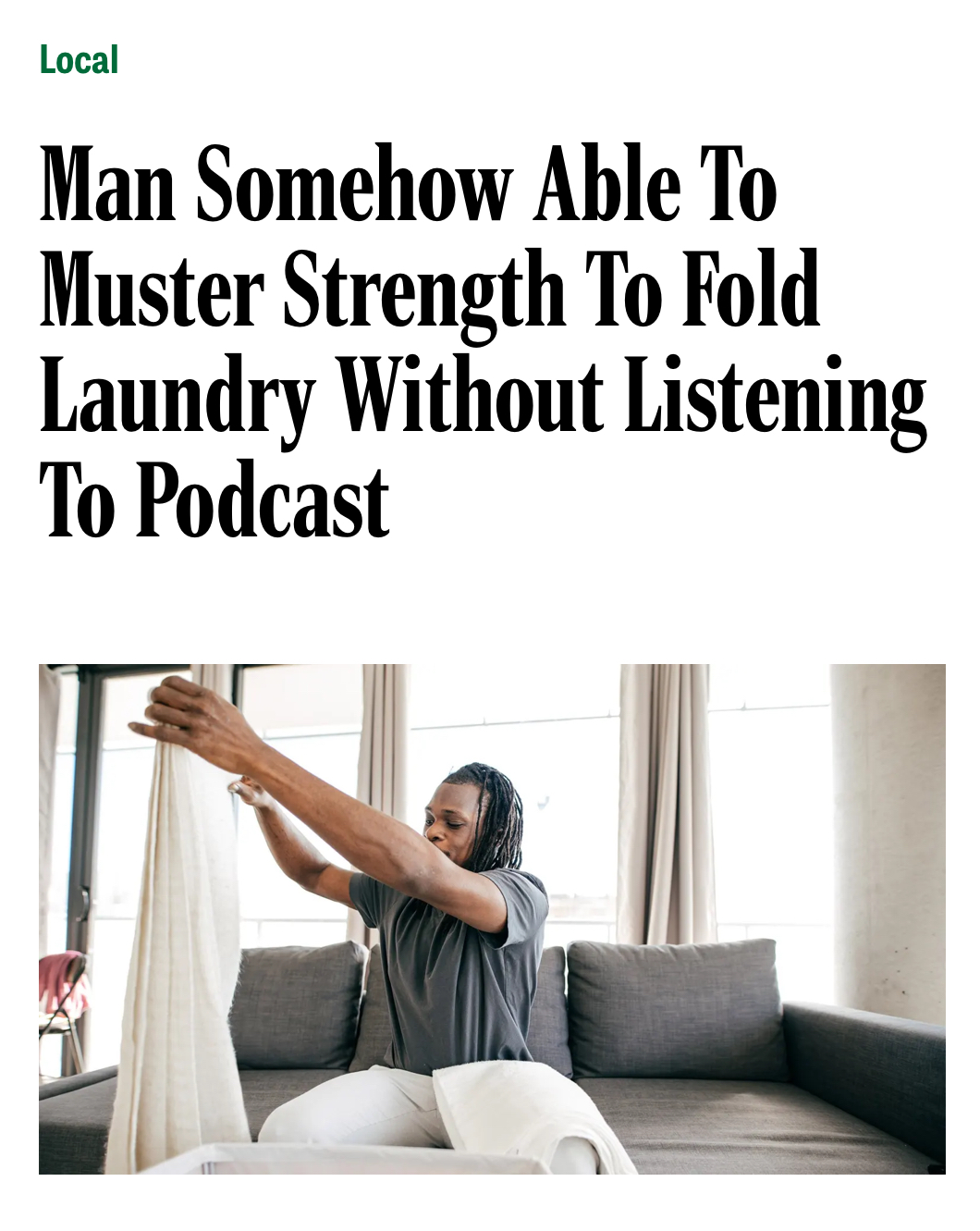
Those in search of productivity maximization tend to over-index on time management and under-index on attention management. If only we could properly harness each moment, we'd have it figured out, right?!
But time management in isolation matters not a whit if we cannot focus. Newport's Law puts it succinctly:
work accomplished = intensity of focus x time
Even humanities-minded folks like me can run that equation. Anything multiplied by zero equals zero. If you effectively block off the time to get a task done but your attention is elsewhere, you'll get nothing done. Zilch.
Attention is hard to come by, and it's endlessly easy to get distracted. Importantly, it's chemically and biologically harder for some than others. No matter what your starting point is, there's value in assessing how much attention and focus you're allocating to each task.
Back to the article — why does it seem an incomprehensible feat to fold laundry without listening to something in the background? In part, because we're used to offsetting the boredom of mundane tasks with on demand entertainment.
This isn't about to get preachy, as I am right there with the average person, often listening to things while doing chores or routine tasks. Nor do I think there's anything inherently wrong with that.
Subscribe for Tuesday thoughts from the crossroads of humanity & productivity
But I have been experimenting with not always defaulting to background entertainment. Everyone has had a "shower thought," where you work out a problem that's been weighing on you or have an idea that you wouldn't have come across otherwise. There are limited distractions and stimuli in that environment, which allows your brain to wander, opening and closing loops of its own accord.
Can we get those types of shower thoughts in other parts of life?
Here's my Onion-inspired challenge: try folding laundry without listening to or watching anything else, noting how it feels and how long you can go before reintroducing noise.
Attention isn't going to magically reappear; it's going to take some effort to get it back, and relatively small challenges like this may help.
And if you fail? Well, you'll have something in common with the article's purported hero: "At press time, Delande had left the remainder of his folded laundry in a pile on top of his dresser after wandering off to go look for his phone."
Even the mighty fall. But at least they tried, and perhaps they learned something in the process.