
Saying Yes
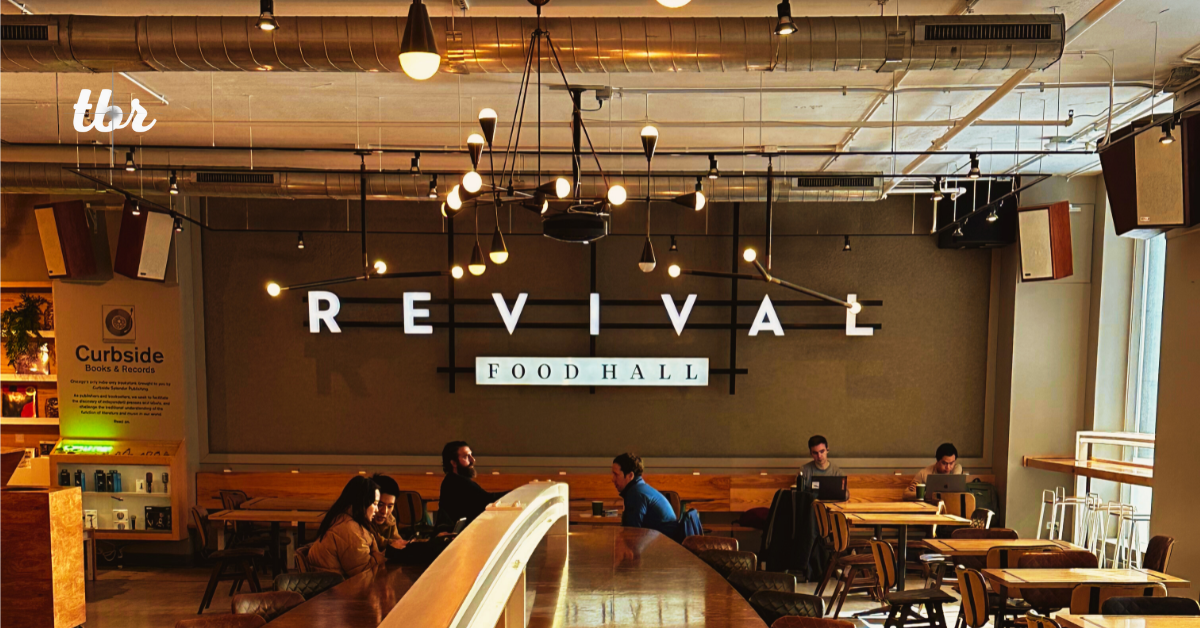
The other day, I walked past Revival Food Hall in Chicago. I stopped in to snap this picture and take a few minutes to reflect on the significance of this spot.
Nearly five years ago, this is where I said "yes" to Warrior-Scholar Project co-founder Jesse Reising about joining the organization full time. That conversation changed my life.
There wasn't a specific agenda for this conversation. Jesse and I were grabbing lunch for old time’s sake. At the time, he was working as a federal prosecutor in Chicago, and I had about a year under my belt as a corporate litigator.
I first met Jesse back in 2013, when my friend Ben suggested I fly out to New Haven to see a Yale "academic boot camp" in action. I was working as a high school teacher back then (to date, the hardest job I've had), so time off was precious, and I could only really afford a single day visit to the program. When I arrived to New Haven, I grabbed breakfast with Jesse and a few other folks, and then had an opportunity to sit in the back of a classroom to witness WSP for myself.
I’ll never forget that initial feeling while watching tatted-up vets from all across the country go toe-to-toe with the legendary Yale professor Charles Hill on Tocqueville's arguments. It gave me the chills – what bizarro universe was this where enlisted veterans who weren't even in college yet felt this confident to substantially engage on such complex academic materials? I was immediately hooked, and Jesse and his fellow co-founders knew it. They agreed to let us launch a branch of the program at University of Michigan the following summer.
And that's how I spent a portion of the next five years: helping launch and run a WSP boot camp at Michigan. No matter what I was doing, school, work, or otherwise, I’d carve out a couple weeks each summer to return to my alma mater to help lead our version of these boot camps. The energy and transformative power of those programs was intoxicating. And every time we'd wrap one up, my partner would hear me say, “If there’s only a way I could do that full time…”
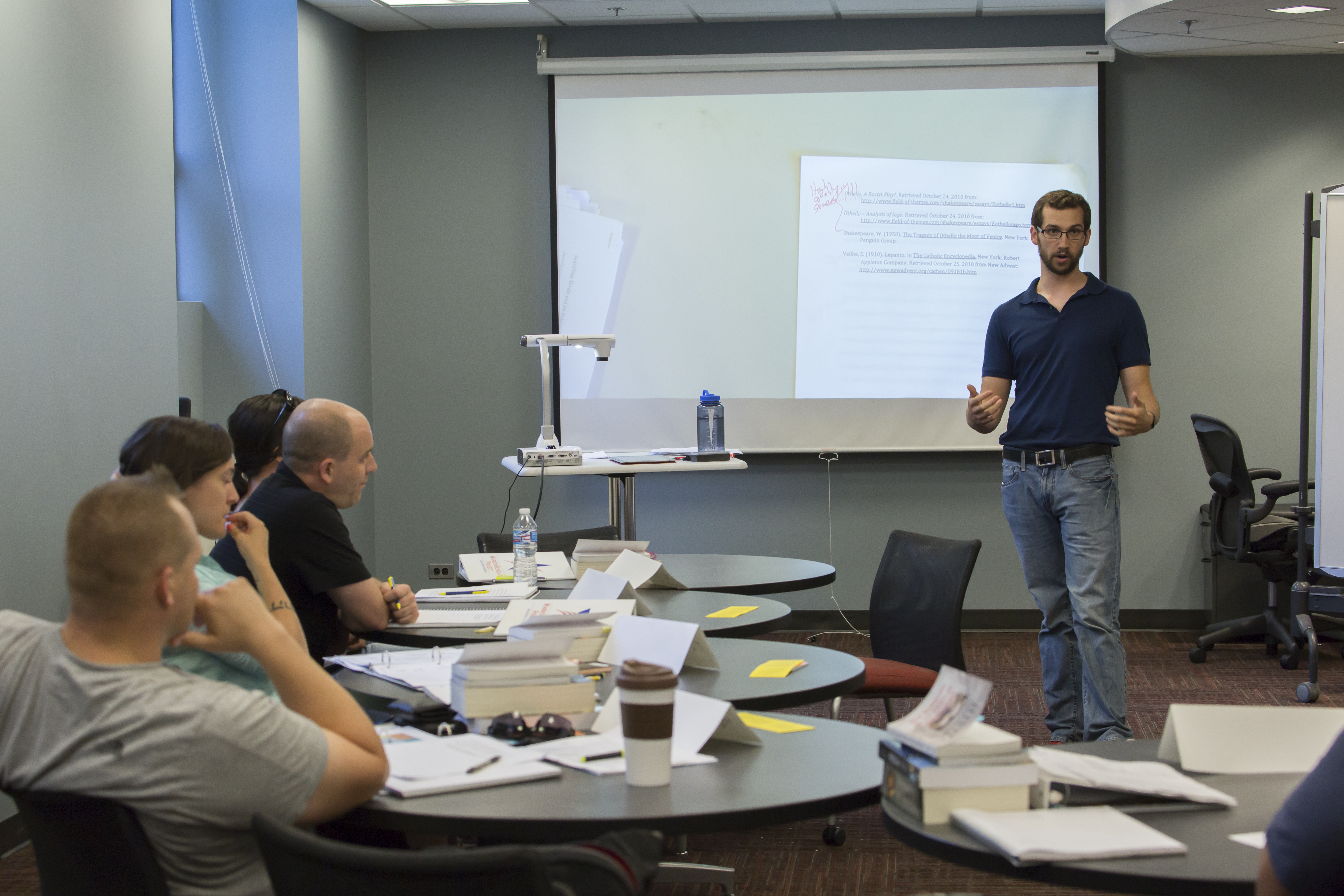
Flash forward to 2018. I was doing well at the law firm, but I was increasingly interested in exploring federal clerkships. I knew that Jesse had built a stellar reputation during his time as a clerk, so I knew I wanted to ask him for his advice on that process.
After some general catch-up conversation, Jesse asked how things were going at the firm. I told him the truth. I was getting tons of work and experience, and I enjoyed the puzzle solving aspects of litigation, but I was unfulfilled. Without intending to fish for any particular response, I shared that enduring thought I could never quite shake: "If only there was a way I could do WSP full time…"
Jesse paused for a minute, and then replied, "What if there was?"
It turns out that the organization was on the precipice of earning a series of capacity building investments from a major foundation, and a key part of the expansion was the creation of a new Chief Operations Officer role. It's hard to put into words how excited I got thinking about serving in this role. I understood the core of WSP's programming through and through, and even though I knew there would be a steep learning curve getting up to speed on nonprofit operations more broadly, I also knew I'd have ample support to make that happen. I knew instinctively that this was the opportunity I had been waiting for.
A few hours later, I was on the phone with the executive director, and a few days later, I was on a plane to go interview with the board chair. The rest, as they say, is history.
I often share with folks that there is literally no job I would rather have than serving as the CEO of WSP. I mean it every time I say it. I also tell folks that I didn't have some type of grand plan on how to arrive at this role, yet I know that my experiences in the Marine Corps, as a high school teacher, and as an attorney were all vital in shaping me into a leader well suited for this particular organization.
When we talk about networking, sometimes we view it in a purely transactional way. Do your research beforehand, go to an event, have a drink or two, and then do everything you can to maximize your time with everybody in the room who could potentially help advance your career. I could say a lot more about the perils of that approach, but for now I'll just say that this lunch with Jesse is, I think, an example of a much more fruitful approach. Developing authentic relationships and deliberately staying in touch can organically create opportunities in a way that transactional networking simply cannot.
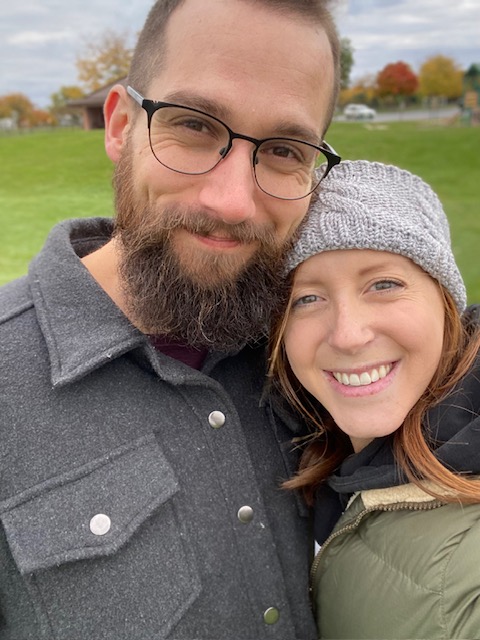
Personal relationships also really matter. Even though we had just had our first kid and bought a house, my wife didn't hesitate for a moment when I asked her if she'd be ok with me taking a massive pay cut to step into this role. That's love and support, first and foremost, but it's also the result of intentional relationship building between the two of us.
So how did I end up with my dream job? In a simple sense, I said "yes" to the right opportunity at the right time at Revival. But the years of various work experiences and the personal and professional relationships built along the way created the foundation for both that opportunity and that answer.