2022 Productivity - Year in Review
In the last week of each year, I strive to do two work-adjacent things: (1) review the systems and mentalities I rely on to keep me on track, and (2) reset my caffeine tolerance (I read years ago that it only takes four days to do so, and I'm sticking to that as a fact even though I can't find a reliable source now). And every year, I'm very good at accomplishing one of those two things.
I write this year's review from my typically caffeinated state.
I find that it's wonderfully useful to take stock of the systems, apps, and processes on which I rely to run my daily life, and I figure others might benefit from the lessons I'm learning along the way.
Also, for those who don't have the patience to read a ~5 minute post (see "clawing back some attention span" below), I made a short video version of this review, just for you.
The highlights from this year:
1 - Obsidian is a wildly powerful tool for linked notetaking
In a landslide, the winner for biggest system change is my switch from Evernote to Obsidian. And holy cow, do I love Obsidian. The level of customizability is at once daunting and invigorating, but even for fairly casual users, Obsidian provides a way of linking thoughts that dramatically changes how the user interacts with notetaking software.
I intend to write a detailed post on how Obsidian has fundamentally restructured my notetaking and thinking. For the moment, take a look at this graph:
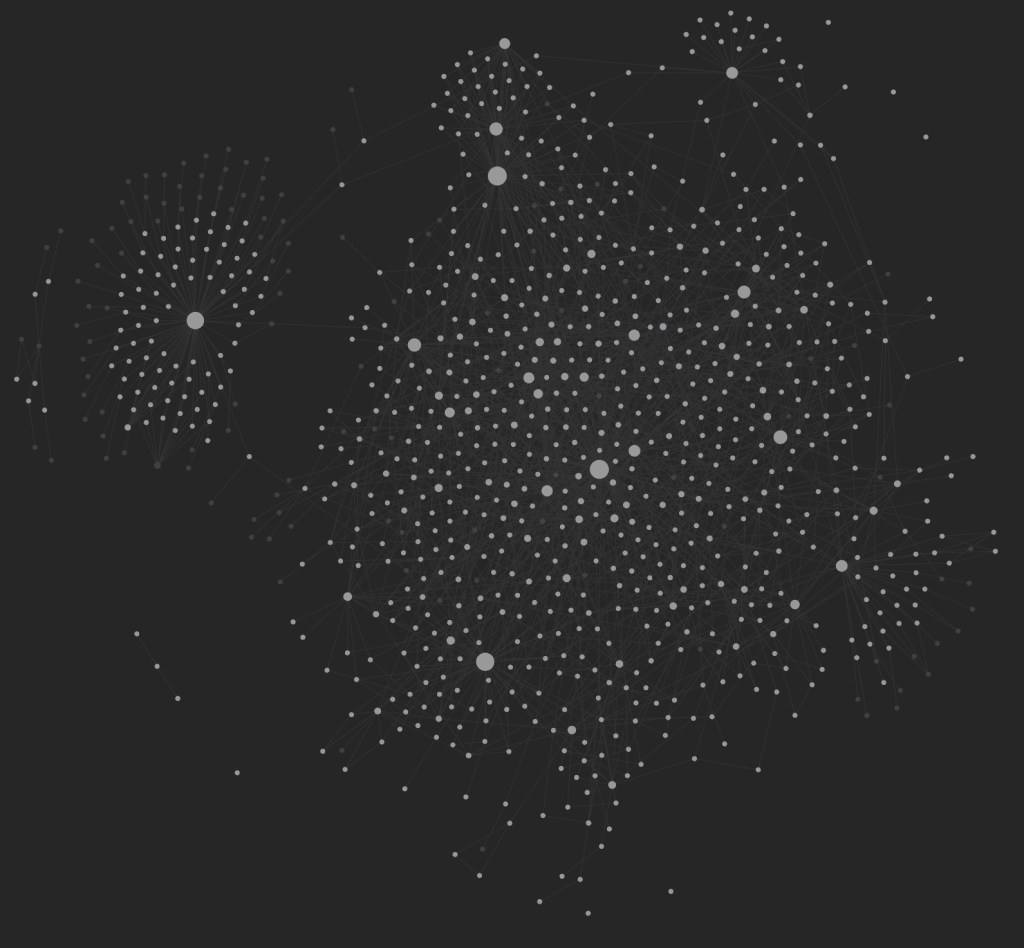
Every dot is a note I made at some point this year. Very, very few stand alone. Just about every note is connected to at least one other note, and most of them are connected to many others. In essence, this helps me recall the context for a specific conversation, and since conversations are rarely only related to one other topic (think of the way your brain makes connections in any commonplace interaction) the true value here is in exploring all of the ways in which one topic relates to another.
Most notes I take are handwritten, thanks to some limitations from my disability. And since I somehow inherited the handwriting chops of my physician father, I wanted to find a notetaking app that could recognize my chicken scratch. Nebo accurately translates 95% of what I write, which is quite a feat. It also supplies a text recognition preview after each scrawled word, giving a real time opportunity to write things a tad cleaner for OCR purposes.
It isn’t as fully featured as apps like Notability, but since I only use it to take my handwritten notes before exporting to Obsidian, I don’t need many features.
2 - My brain is not for remembering; it is for processing, problem-solving, and thinking
I've been leaning into this mentality of abandoning my brain as a memory storage device for a few years, but 2022 is when this idea really took hold. Obsidian helped. There's something counterintuitive about thinking about your brain as something other than a storage device, but it's wonderfully freeing when you can get on the other side of that hump.
For most of my life, I maligned my bad memory, viewing it as this core inhibitor that dictated my capacity to do well in any given interaction. Honestly, it‘s been years since I thought of myself as someone with a poor memory. I no longer ask my brain to remember things for me. Sometimes it does without my asking, of course (great job, brain!), and I've found that I have better recall for details that really matter.
So how did I get to this stage?
First, a full embrace of the "closing loops" principle. In short, as soon as I think of something that has to get done, I either do the thing immediately or write it down in a place that I know I’ll come back to at a later time. More to come on this in a later post, but suffice it to say that this single principle has genuinely changed my life. If I think of something that needs some type of follow-up action and I don't know where else to put it, I throw it in my Todoist inbox, knowing full well that I will come back to reconcile that inbox within a day or so.
Second, detailed and intentional notetaking in Obsidian. Most interactions of substance I've had with someone in the past few years, particularly those that come with some type of follow-up action, are documented in this system.
3 - Hardware matters, and the iPad Pro + Magic Keyboard is a killer combo
There are thousands of posts extolling the virtues of this hardware, so I will spare you my detailed thoughts. I will say that it took me years to come around to the very concept of the iPad, let alone a proprietary keyboard that costs hundreds of dollars, but if I could do it all over again, I would make these purchases years earlier.
At some point, I'll do a detailed post about what it's like to be disabled and to rely on a hodgepodge of software poorly calculated to serve the needs of those who cannot type as much as they would like. For now, I'll just say that Siri is good enough for my needs on the road, so unless I know I'll need to do some serious typing that will require my PC laptop + Dragon Dictation, that ThinkPad is staying home. But Siri has a long, long way to go.
4 - Readwise, Instapaper Reader, and…RSS?
What's the point of reading articles and nonfiction books if you aren't going to retain the information? Enter Readwise, an app which takes your highlights from ebooks, PDFs, and articles and offers you a daily digest of those highlights for you to review and increase your retention. It's a simple concept done exceptionally well, so well that this quickly became part of my daily routine.
What's more, it syncs with Obsidian, so my highlights across all digital mediums are effortlessly imported into my offboard brain/knowledge management system. My only frustration is that I didn't have these tools back when I was writing term papers in college.
The same company behind Revised launched a public version of an app called Reader, which allows the user to save articles from virtually any source into one app. 72 hours into using this app, I canceled my subscription to Instapaper, which does the same thing, only worse.
Reader also sparked my interest in RSS feeds. I'm about 20 years late to this party, but a combination of this app with my (temporary?) departure from Twitter had me looking for ways to collate news from across myriad sources in one place, leading me into the dated embrace of RSS. For websites that care to keep their RSS feeds live, I have found this to be an ideal way to quickly sort through headlines and save for deeper consumption articles that I actually care about.
These three things combined leads to a nice morning routine where I feel like I'm consuming relevant information and storing the bits that I want to retain in meaningful ways.
- I start by reviewing my RSS feed (via a tab in Reader), which pulls in news and analysis from just about all of the sites I care about
- For any headline that catches my attention, I'll save the full article to Reader to read later.
- Throughout the day, I'll read articles in my Reader queue, highlighting and commenting as I go.
- I'll then fire up Readwise, automatically picks up on those highlights as well as highlights from anything I'm reading via the Kindle app. I'll review the random mix of highlights and favorite anything that seems particularly meaningful.
- If I want to see a list of everything I've read or review all the highlights at once, everything is accessible in Obsidian.
I'm really digging this system.
5 - Clawing back attention span
Step 1: Get off TikTok and Twitter. Step 2: Force myself to read more longform articles and books.
The inexorable pull is towards shorter content with immediate – and I mean immediate – gratification. There's something really insidious about this system. As I spent more time on platforms like TikTok and Twitter, I found myself scrolling if there wasn't some type of payoff within five seconds or so. What an utterly disastrous existence.
TikTok's algorithm really is something special, as it's devilishly good at identifying what you will be interested in and what you will skip. Creators are wise to the algorithm, at least in broad strokes, so they create content with a higher probability of being fed to the masses. It's a vicious cycle, and our attention spans are the victims.
Twitter certainly has its utility. In the wake of the 2020 election, I turned to Twitter for play-by-play analysis of legal challenges to the election results, something I couldn't find anywhere else. But two years later, I found myself microdosing the app for quick hits of entertainment/gossip/news/jokes throughout the day, every day. The Musk takeover was the push I needed to actually take a break. While I don't see myself ever going back to TikTok, I may come back to Twitter at some point, albeit with some more specific self-imposed usage rules.
---
That’s all for this year’s review. And no, none of this was written by ChatGPT.